Found this piece and think it just seems to sum up so much that is wrong with Isreal and its attitude to the arab population. Surely what difference does it make if somebody is a Jew or an Arab.
This is taken from the Jeruselm Post.
http://www.jpost.com/Israel/Article.aspx?id=182113
-----------------------------------------------
Court rules consensual sex between Jewish woman and Arab constitutes rape.
Jerusalem District Court ruled that consensual sex between a Jewish woman and an Arab posing as a Jew constituted rape.
On Monday, the court sentenced Sabbar Kashur, 30, an Arab from Jerusalem, to 18 months in prison as part of a plea bargain for rape by deception.
Kashur met a Jewish woman in downtown Jerusalem in 2008 and introduced himself as a Jewish bachelor seeking a serious relationship, the indictment said, according to media reports. The couple then went to a nearby building and had consensual sexual intercourse; Kashur then left.
The woman filed a complaint after realizing that Kashur was not Jewish.
The court ruled that the consent for sex was obtained under false pretenses.
"If she hadn't thought the accused was a Jewish bachelor interested in a serious romantic relationship, she would not have cooperated," the judges wrote
Thursday, July 22, 2010


Tuesday, July 20, 2010
Modern Childcare for a modern state.


For me Sinn Fein is about building a modern state in Ireland, replacing the half baked relics of failed partion with one state. But we are still a distance from a modern state , and thats not to focus on the record of the greasy fumblers governing us in the south, but instead to look at who is ruling us. Overwhelmingly they are men! Six out of every Seven TDs in Leinster house and there is four male for every female Seanadóir. The situation is actually lamentable with 14% of TDs being women, compared to the EU average of 27%.
Increasing the proportion of women in Leinster house, the seanaid and northern assembly would seem to be a fair proposition solely on the basis of having the legislative bodies reflect the gender divide. The imperative to do so is not solely based on notions of fairness though but the urgent need to improve the standard of governance and the responsiveness of govts. to the requirements of all its citizens.
The south has a national strategy for increasing women's participation in the legislative bodies. However it has its work cut out for it. At the current rate of increase it will take 370 years for the percentage of women in the Leinster house to reach 50%. Hardly good enough.
Noted economist Anne Sibert, and others, have already commented on how an increased percentage of women in financial circles could have mitigated the worst excesses of the financial bubble.
The other aspect of this is ensuring the responsiveness of the Govt. to the needs of its citizens. Legislative bodies overwhelmingly stacked with men might not be best suited for developing policy that considers how to create a women friendly society, in other words a modern society giving equal opportunity, a society that does not simply throw its hands in the air and say thats how its always been.
A good example of this carry on sure tis grand attitude is childcare. One of the stories of the Celtic Tiger (late of this parish) was the greatly increased participation of women, of all ages, in the workforce. Considering this was an increasing trend since the early 90s then it would be reasonable to expect that a suitable childcare policy would have been developed over the years such that a decade after the boom started we might have an affordable childcare system.
The OECD a few years back did a series of reports on the Kids and Careers balance . In 2003 Ireland was one of the countries covered. Even a decade after the boom started to take off it found that while married Irish mothers were at work in huge numbers single mothers were not. While up to 80% of single moms in Australia were working in Ireland it was half that. The buden of expensive childcare was denying these women the opportunity to build a career and was effectively forcing them into a benefits trap. For a Govt. that boasted so much of incentivising the independent
entrepreneurial spirit keeping single mothers out of the labour market through high childcare costs just didnt register as an issue. Instead childcare in southern Ireland was to be provided by the extended family if you couldnt afford the exorbitant costs of care.
Hardly a fair response from the govt. and as damningly typical of their short-sighted policies. France considers child care provision as not only a social policy but equally as an economic policy allowing greater labour force participation while making sure that the state (and companies) play there part in building a child friendly society. In a Europe faced with an imploding demographic such an approach makes sense.
In Ireland though its clearly not a concern for the old boys club. 7 years after the OECD pointed us out as failing in our provision of childcare support we still have cildcare costs that are far above the EU average, with Irish families spending 20% of their incomes on full-time crèche facilities compared with 12% of income for families in the rest of Europe.
2003 was the year the OECD pointed out our second rate childcare policies. It was also the year the Spire was finally topped off in Dublin. This was the symbol of a new and modern Ireland.
A much more fitting symbol would have been childcare system that was at least the equal of what our neighbours in Europe have.
How likely were the lads who thought the Spire a good idea to even consider that. A bit of different perspective would have made a difference. More women in the legislative bodies would have helped provide that perspective.
There is a new blog trying to give voice to that perspective and give a greater role to Irish women in politics. There is plenty of work to be done before that job is finished and I wish them well.
Monday, July 19, 2010
The Martin McGuinness speech that has caused so much anger.

Below is the text of the speech made by Martin McGuinness at the McGill summer school. His comments regarding the need to remember with respect those Irish men in the British army who died in World War 1, has caused many republicans to condemn him. I myself see nothing wrong with the speech as a whole and feel he makes a strong argument. Have a read and see what you think.
Here is a link to the McGill summer school site.
--------------------------------------------------
I am very pleased to have been given the opportunity to deliver this year’s John Hume Lecture. When I was in Liverpool this week for the awarding of the City of Culture title to Derry I was very pleased to see John and Pat Hume celebrating in Derry’s Guildhall, an announcement of immense cultural and economic significance for the North-West and our entire island. I have no doubt that those passionate about arts and culture in Ireland will rally to the cause for 2013.
And whilst the past week brought a great result for Derry, we who are from Derry are deeply sensitive to the fact that the Buncrana area of Inis Eoin, a place very close to my heart, was plunged into unbearable grief and sadness, with the deaths of eight people, seven of them young men, with their lives before them and the eight man in his sixties.
On this occasion here in County Donegal I want to extend sympathy to the families and the people of Inis Eoin who suffered this appalling tragedy at around this time last Sunday. Suaimhneas síoraí dóibh uile.
John Hume, like Gerry Adams, myself and others in the Sinn Féin leadership, took huge political risks and faced, at times, vilification in order to make a beginning to the Irish Peace Process.
For that enormous contribution John Hume has quite rightly been honoured and he continues to be recognised fittingly in this Annual Lecture. I am happy to join the list of speakers who have given the lecture and to acknowledge again John Hume’s pivotal role in helping to initiate and to build the Peace Process and all that has flowed from it.
The fundamental premise for that was that the status quo was not an option; and that a process of change was required.
The Peace Process moved us from the tragedy of conflict to an era of dialogue, negotiation and a new political dispensation. As a result, the political landscape in the North has been utterly transformed in recent years. The demilitarisation of society, the existence of fully functioning all-Ireland political institutions and the transfer of powers on policing and justice from Britain to the North are all evidence that the Peace Process is delivering and that politics is working. This is a work in progress.
However, there remain small groups and individuals who cannot grasp the political realities of Ireland in 2010; that is, that change has happened, that it is ongoing, that it is unstoppable and that the status quo they hanker back to is unacceptable. They can be found in the unrepresentative militarist factions who continue to carry out armed actions and the criminal elements who operate under the cover of bogus patriots. This was graphically illustrated last week in Ardoyne, where it is widely believed that many of those who sat on the road wearing t-shirts describing themselves as, residents not dissidents, told those anxious for a riot, many of them children, to do so only after they had left the road. Regrettably the Orange Order also appear rooted to the past and unwilling to join with the rest of us in making necessary compromises in the interests of peace and progress. They continue to refuse to talk to nationalists and hold the rest of society to ransom, over a tiny number of contentious parades out of thousands of Loyal Order marches each summer.
The sectarianism played out on the streets of Belfast in recent days needs to be tackled. I have long argued that the Orange Order themselves could transform relationships by taking a bold initiative, by thinking of the greater good and by stepping forward and making their contribution to a new and better future. By dealing with the issue of contentious parades in a generous fashion the Orange Order has the potential to build a new relationship with their Catholic neighbours. My door remains open to them always.
These issues are the legacies of an island emerging from four decades of conflict and point to the fact that Ireland needs a process of National Reconciliation. The recent publication of the report of the Saville Inquiry into Bloody Sunday, the reaction of the new British Prime Minister David Cameron and the exoneration of the 14 people murdered on the streets of my home city that day has the potential to be a defining moment in such a process.
Republicans caused much hurt during the conflict. I have acknowledged that and as a republican leader I accept my responsibilities both for the past, for building a new future and importantly for ensuring that the truth about the past is told – for the victims and survivors but also to ensure that mistakes are not repeated in the future.
I repeat here tonight a call for the establishment of an independent international truth recovery process – one which is victim-centred and which can generate the confidence necessary for full participation.
I along with other republican leaders have made it clear that we will participate in such a process. We now need the same commitment from the British Government and from unionist leaders. We need to go beyond simply telling the stories of the past 40 years. We need to examine the root causes of the conflict as well as the consequences.
Within civic society across the island we have much to share and to learn from. One of the effects of partition has been the separate development of communities whether on religious grounds in the North or between the communities North and South. Yet we all share common problems that do not recognise any border.
I believe that greater cooperation within civic society can bring about innovation, create change and promote best practice. In particular we need to jointly address the issues of community regeneration, sustainable economic growth, environmental protection, sectarianism, racism, road safety, child protection and social inclusion. Again I would ask what more can civic society do to deepen our understanding and our actions in addressing these issues.
While highlighting areas for additional activity I would also like to take this opportunity to pay tribute to those in civic society who have and continue to be vital to social cohesion in Ireland. In some cases they are the very threads that hold our society together.
I am thinking of the community sector, the trade union movement, the GAA and other sporting bodies, the credit union movement, and ordinary grassroots activists across this island.
The recent cycle of economic growth and recession demonstrates the interdependent nature of the economy North and South. The establishment of the Northern committee of NAMA, dealing with 5 Billion Euro worth of loans, demonstrates the level of our interdependence.
For too long the economy of the border counties has been the victim of the changing tides of cross border trade. This level of volatility and instability undermines the economy of the community living along the Border. We need to develop joint processes that will create the stability vital to sustainable development.
On a national level there is no advantage to having two competing economic development agencies vying with each other for Foreign Direct Investment. It is counter-productive. It confuses investors and drives down value as we compete to provide the cheapest option.
As one US investor recently said in relation to the North — “It is hard to get excited about a market place and labour pool of 1.5 million people, but when you look at 6 million people then it gets interesting.”
So we need to plan our economy on an all-Ireland basis. The plan must identify how to use our assets, our people, our universities and our reputation to grow the economy in a sustainable and beneficial way.
We do not have the luxury of a long time to ponder this. We are in the middle of the greatest economic challenge to our nation and we need to act quickly and strategically. The decisions we arrive at will have implications for generations to come. Let’s not repeat the past. Let’s not circle the wagons. Let’s look at how we grow the economy and how we can deliver for all.
We are told that statistically the recession is over but anyone who believes that has to be living in cloud cuckoo land.
We have close to half a million people unemployed in Ireland, some 450,000 of them in this State. Emigration from our country is now being measured once again in the tens of thousands per year. Nowhere is it worse than here in County Donegal which, even during the Celtic Tiger years, did not enjoy the benefits of the economic upturn to the extent of other parts of the state.
Businesses of all sizes are closing. Families are struggling with massive mortgage debt. People dependent on social welfare are being pushed further into poverty. Our public services are subject to cuts that are challenging their ability to meet basic needs in health and education.
And alongside that we have the spectacle of the bankers walking away with super huge golden handshakes.
Over 70 percent of the population live in debt on a week-to-week, year-by-year basis
The top five percent of the population held 40 percent of the state’s wealth whilst those on the lowest ten percent household income group struggle to get by on less than €158 a week.
The vast majority of people see and understand clearly where the responsibility for all of this lies.
There is a myth that everyone in Ireland was having a wild party during the Celtic Tiger years. This is untrue. It is also insulting to the vast majority of people. It is important to point this out because if we forget what happened in the very recent past we are liable to repeat the same mistakes. There were alternative roads to follow, roads that we now need to travel.
The question we have to ask now is not just what to do next but how well equipped are the people of Ireland to address the huge problems we face.
The growing gap between the ‘haves’ and the ‘have noughts’, the rewarding of private greed at the expense of the public good, the failure to think strategically and in the long term interests of the citizens needs to end.
As always, partition complicates matters. In the North we are tied to the British Exchequer and our Executive and Assembly are denied fiscal autonomy. We do not have revenue-raising powers and are dependent on a block grant from London which is based on Barnett– a population statistic based formula rather than need and which takes no account of the legacy of partition and decades of underfunding by the British government.
In the 6 Counties Catholics remain twice as likely as Protestants to be unemployed.
100,000 children in relative poverty and 44,000 children living in severe poverty
Of the 20 areas in the north suffering highest levels of deprivation 17 are nationalist.
We are now faced with a massive reduction in the block grant to the North. In this situation we in the Executive and Assembly must battle to protect public services from cuts. It is a huge challenge.
The current situation emphasises, as never before, the need for the Executive and the Assembly to have fiscal autonomy and for the economy in the North to be more closely integrated with the rest of Ireland.
The effects of recession are worsened and our ability to respond effectively is hampered by the existence of two currencies, two different tax and social welfare regimes, two sets of public services and all the inefficiency and duplication that entails.
I need not tell people in County Donegal, the neighbouring County to my native County of Derry, about the disruptive effect of Partition on the Border Counties themselves. Greater cross-border co-operation and integration is an economic necessity.
My party has continually raised the issue of duplication of administration in an island the size of ours. We cannot sustain such duplication. We have two Health systems, two education systems, two Arts councils, two sports councils, three bodies with responsibility for tourism, and as I already highlighted two competing economic development agencies.
We have patients and families in the North having to travel to England for treatment that is available in Dublin. We have patients in Letterkenny travelling to Dublin when the same services are available in Derry.
The Border has a negative impact on all communities who live along it.
Two currencies, two tax systems and a myriad of issues which affect citizens' everyday existence — things like wages, pensions, benefits, terms and conditions — all of these are daily 'bugbears' for people living in this region, and especially for those who have to cross the invisible border to work in the "other jurisdiction".
These are only examples of duplication of administration and while they have a cost implication the lack of co-ordination also impacts on the quality of service.
To get the best out of our public spending, we need to end this duplication and competition and develop and deliver co-ordinated services on an all-Ireland basis.
The North-South Ministerial Council and the All-Ireland bodies are doing good work in this regard but much, much more needs to be done.
Both in terms of democratic governance in Ireland North, South, East and West and in terms of the economy of the island, I believe that we need to be bold in our thinking and to aim high.
The theme ‘Reforming the Republic’ for me does not mean tinkering with two partitioned political and economic systems on our small island!
The Irish Republicanism I believe in holds that a national republic has yet to be achieved. It holds that it is futile to speak of ‘renewing the republic’ or ‘reforming the republic’ without addressing the need to end partition and to bring together all the people of Ireland. And to achieve this through purely peaceful and democratic means is I believe a flag we can all rally to.
We need a national debate on the desirability of Irish unity and on how it can be brought about. That debate must, of necessity, involve unionists. I reject the view that to even speak of unity is ‘damaging’ or ‘backward looking’ or a threat to the institutions established under the Good Friday Agreement and the St. Andrew’s Agreement.
The Good Friday Agreement provides an agreed mechanism for bringing about the reunification of Ireland. Unity is not an issue of the past. It is a live issue of the present and, I firmly believe, the direction in which we are all ultimately heading. How best and how soon to reach that goal is the question we need to address.
A start could be made next year by granting to Irish citizens in the Six Counties the right to vote in the Presidential Election. The current Uachtarán na hÉireann is a native of Belfast but if she had still lived there at the time of her election she would not have been able to vote for herself.
Provision should be made for such voting rights, not only for citizens in the North, but also for Irish citizens living abroad. Voting rights are granted by many states to their citizens living abroad, within a reasonable period from their leaving the home country. At a time of renewed mass emigration it would be a real recognition of the importance and value of our recent exiles if such rights were granted. Patrick MacGuill was, after all, one of our exiles forced out by poverty.
We need a re-built the Irish economy, an all-Ireland economy. We need strategies for saving and creating jobs; reforming the tax system to ensure the wealthy are paying their fair share; eradicating waste in public spending, such as exorbitant executive salaries; drawing up a realistic debt repayment structure on the basis of a growing economy, that will grow if it is invested in; and fully regulating a new finance system with necessary secure measures like stronger capital requirements for banks and the supervision of credit rating agencies.
All of this should be done with the aim of building an economy to serve the people. This would provide the basis for a transformed, equitable and efficient health service, education with access for all, decent and affordable housing, sound social welfare support for everyone who needs it and security for our older citizens.
A political system in which careerism for personal gain has for some come before commitment to public service must look seriously at itself to ensure our island economy is run not on the basis of individual greed but the good of all.
We need to renew our commitment to public service and to the common good. When we as a people have achieved great things in the past we have done so because individuals put the nation before themselves. That is the spirit of the 1916 Proclamation of the Republic and the Democratic Programme of the first Dáil Éireann.
For me, renewing the Republic, means applying the principles of those documents to our own time. It means unity, equality and lasting peace for all the people who share this island. It means building an Ireland of Equals.
This 30th Patrick MacGuill Summer School gathers as we enter the decade which marks the centenary of a number of defining events in Irish history including the Great Lockout of 1913, the Easter Rising, the Battle of the Somme, the Ulster Covenant and the Partition of Ireland. Nobody should be afraid of commemorating or debating these landmarks in our history.
It is right to recognise the heroism of those who stood for the vision of the Irish republic articulated on Easter Sunday 1916. A republic that pledged:
‘religious and civil liberty, equal rights and equal opportunities to all its citizens, and declares its resolve to pursue the happiness and prosperity of the whole nation and all of its parts, cherishing all of the children of the nation equally’
The Proclamation remains a living testimony to the vision and commitment of the leaders of 1916.
And it continues to represent a charter for change for Irish Republicans. It spells out the unfinished business and what is required to complete it.
To build the united independent Ireland of Equals it invites us once again to bring together all strands of Irish nationalism, republicanism and the labour movement.
It challenges us to become persuaders, to reach out the hand of friendship to all who share this island with us, particularly unionists, to build new alliances, to devise and develop new strategies and shared positions and to build and broaden support for this objective.
It is also right to recognise in the period ahead the sacrifice of those Irishmen who fought in the First World War. While some may question the value of their actions no one can set aside the scale of the loss or doubt the personal tragedy.
Republicans have no wish to erase the memory of their bravery or their part in Irish history. Many working class Irishmen fought in the British Army at that time because of the unrelenting poverty that they and their families experienced. Their motivation and their experience were articulated by Tom Kettle, an Irish National Volunteer, who shortly before his death at the Somme in September 1916 wrote these lines to his daughter:
Know that we fools, now with the foolish dead,
Died not for Flag, nor King, nor Emperor,
But for a dream, born in a herdsman's shed,
And for the Secret Scripture of the poor.
Among the courageous Irishmen who gave their lives in that war also were those who fully believed in their actions and the choices they took. Their sacrifice and their loss are no less worthy of remembrance.
The experiences of republicans, nationalists, unionists and all others form part of our collective memory. They are part of who we are as a community, as a nation.
While we must remember these events we also must critically engage with our past. The past one hundred years, while a fraction of the life of the nation, was taken up by partition, divergence, exclusion and conflict.
These failures must be consigned to the past. I believe that Ireland is now set on a course towards unity, convergence, inclusion, and lasting peace.
This is not a bland aspiration. In this way we will deliver equality, prosperity and reconciliation for all our people in all their diversity. In this way we will build a nation of which our children can be proud and a republic worthy of the name
Friday, July 9, 2010
Fianna Fáil are dead - We must forget about the left alliance and put the boot into Labour NOW or else!!!!

Received the piece below from a contributor in Dublin. Well worth a read.
-----------------------------------------------
At the next elections only about seven people out of every hundred will put a vertical mark beside our candidate. So say the opinion polls. So said the last two elections. Against a backdrop of one in three of our core demographic (under 25s) without a job and a half a million people rotting on the dole queues this situation is calamitous. On top of this we have an electorate thirsty for change like never before in the history of the 26 county-state - who want to find hope from a dismal political landscape and have so far sought refuge in the mirage that is the Labour Party who have hovered up virtually all Fianna Fail’s lost support while the rest of us look on.
Even the gutless Blueshirts have tried to eat their own young as a response to the polls. Where is our reaction?!!
The unprecedented defection of councillors in Dublin did not jerk us from our deep sleep and now neither is the potentially ruinous poll numbers. It seems to me as if we are a/ consciously adopting a careful strategy of non-strategy whereby we let the other party’s discredit themselves and we succeed on election day by default or b/ we have no clear strategy. I suspect b.
A cunning plan…
At this stage in the game, flogging the rotten Fianna Fail carcass isn’t the answer – the voters that will abandon them have already declared for Labour and it is unlikely the deluded dregs of the Fianna Fail vote (22-24 per cent) will abscond now. It follows therefore that we start to lay the boot into Labour and expose the raging populism where they will say and do what ever it takes to get their grubby arses into the back of a ministerial merc. Their Croke Park cop out is a good place to start.
We need to plant the seed in the public mind that a vote for Labour is a vote for Enda Kenny and his fascist policies and that this impending government is looming over them and their communities with a massive knife waiting to cut their incomes and services further. Unfortunately our unwillingness to reject coalition with the two main parties was a mistake that weakens our position a bit in this regard. Hopefully at the next Ard Fheis we will collectively realise this and rebuff them properly.
In discussing this with a fellow Shinner lately he responded that we couldn’t really go after Labour with all our zeal because we ideally want to build an alliance with them. Bollocks. The next government will be Fine Gael-Labour and talk of left alliances are presumptuous and premature. When the sums are right Labour is our best option. But for now we are in a fight with them for our own survival and if we don’t claw back our votes they will have nobody to align with.
Get the simple things right lads…
But as well as a flagging political strategy, the nuts and bolts of the Sinn Féin operation are failing as well. The mechanics of having a party leader based in Belfast dipping in and out of a debate in Dublin does not wash with people. Like others have already mentioned, we need twin leaders, north and south, operating under the party president. This leader has to be elected from the current Dáil deputies at a special meeting of Sinn Féin members. Such a figurehead would take part in leaders’ debates, feature on the ‘satisfaction with party leaders’ polls and act as the visual front for the party in the twenty-six. As pointed out by Ruadhán here previously - by accident of history we are seen as a northern-based party and this crisis of identity is threatening to sink us in this state. It is within our power to set right this imbalance of power but if we are inflexible on it we will continue to pay the price.
The leadership issue is but one element necessary to force us into the debate. It is only half of the equation. We have to get more inventive with our output. With only four TDs, by and large the media ignore us. Entire weeks go by with only a handful of meaningful mentions. It is back to the chicken and the egg. Unless our message gets out we won’t have more TDs and unless we have more TDs we won’t get our message out. Our press team needs to think up creative ways of cracking into the media by making it impossible to ignore us. To supplement the leaflets and community work done on the ground we need the Sinn Féin message coming across the media more than it is.
Cries in the wilderness…
Various people including Toiréasa Ferris have vented their dissatisfaction with Sinn Féin in the south. Still it seems to me that en masse, as a party, we don’t seem to be engaging with the obvious problem of static support in a time of massive political disorder - like a dysfunctional family ignoring the alcoholic father. Even if you scroll down to Ruadhán’s previous article below there is only there is only one comment in response. It is as if we think we are due one good poll result and after we magically get it then everything will be dandy. Or that after we get seven TDs (enough for a technical group in Leinster House and a bit of guaranteed airtime) we’ll be grand. These things are not on the cards as of now – and they won’t be if we trundle on month after month without addressing our problems.
Finally and in conclusion…
At the Ogra Shinn Féin National Congress in Belfast in November, Gerry Adams called for ‘impatient Republicans’ to stand up and be counted. He’s right. A bit more constructive impatience is what will turn it around for us.
Monday, July 5, 2010
West Belfast - curfews, Ballymurphy and Joe McDonnell
 The Bloody Sunday report helped raise the profile of other massacres by the British army in the north, especially that of Ballymurphy in West Belfast. West Belfast was especially hard hit during the troubles and paid a heavy price. This period is the 40th anniversary of the Falls curfew and the 28th anniversary of Vol. Joe McDonnell. A reminder of the difficult times that West Belfast has undergone.
A series of anniversary vigils will take place across Belfast this Wednesday, 8th July, to mark the 28th anniversary of the death on hunger strike of IRA Volunteer Joe McDonnell.
Joe, a 30 year old married man with two children from the Lenadoon area of West Belfast, died after sixty-one days on hunger strike and was the 5th hunger striker to die.
Ex POW and West Belfast Sinn Fein MLA Jennifer McCann said:
'Joe McDonnell was a deeply committed IRA Volunteer.
'He was a loving father to his children and a good friend and comrade to many, many people.
'Joe was interned twice in the early '70s and was arrested again while on active service in 1976 along with Bobby Sands and a number of others.
'He was sentenced to 14 years and upon entering the H-blocks he refused to wear the prison uniform and joined his comrades on the blanket protest.
'On 9th May, 1981, he commenced his hunger strike, taking the place of his friend and comrade, Bobby Sands, who had died four days earlier on 5th May.
'In June 1981, during his hunger strike, Joe stood as a candidate in the Sligo/Leitrim constituency during the general election and came very close to being elected.
'Joe McDonnell was a great Irishman and today his name and the names of all the other Hunger Strikers inspire people in Ireland and across the world.
'He was a brave and courageous volunteer and that is why we will remember him with pride on Wednesday.
'I would encourage members of the community to come out and attend the vigils.'
The assembly points for the Joe McDonnell anniversary vigils on Wednesday, July 8th, are;
Falls Road Sinn Fein Centre - 5pm
Bottom of Whiterock Road - 5pm
Connolly House Sinn Fein office, Andersonstown Road - 5pm
Stewartstown Road (Front of Dairy Farm Centre) - 5pm
Top of New Lodge Road/Antrim Road junction - 5.30pm
Mountpottinger Road/Short Strand - 5pm
Saturday, July 3, 2010
Community Politics, Popular Fronts and the first thing on the agenda

The Belfast Telegraph today carries a short piece on the creation of cross community politics in the north of Ireland.
It lays out a strategy of developing a Popular Front in order to unify sectional interests in both communities who would you think have much in common i.e getting ordinary working class people in both communities to recognise they have plenty in common.
The specific strategy is to establish an:
electorally focused 'popular front', consisting both of political parties and individuals. The organisation would raise funds, provide organisational support for elections, support other campaigns, and, most importantly, promote debate around developing a progressive agenda. Activists would come from all traditions and would seek support from all.Okay but easier said than done and based on the premise that there is no party already working on building cross community politics. Even though its a short piece it does not mention Sinn Fein once.
Its very easy to write a plan on building a cross community vote but very hard to do that in practice. One of the issues that makes this so difficult obviously is the political divide. Even if working class people in both communities have common interests they also have different political aspirations that cant be ignored, though they can be persuaded to change. The Workers Party tried to build cross community politics in the north previously, and for this article its good to park the many differences with that party, but its efforts to expand into loyalist communities were unsuccessful while its reading of the political reality of the north resulted in it losing support in the nationalist communities.
The proposed "Popular Front" strategy in the Bel Tel argues that "certainly, on a local level, there's no advantage in class terms to either remaining part of the UK or becoming part of a united Ireland." Is that true though? Does that set the value people place on having a sense of national identity at zero? And in a place like the six counties where two communities have aspirations to different national identities does it mean that looking at the challenges of the north purely in "class terms" is to miss out on the realities of political life there. Is an analysis purely in "class terms" a viable option today, or for the next few years? That doesn't mean progress cant be made towards it but first ground work has to be done before its an option. Any thoughts on that?
Look at the work of Sinn Fein in East Belfast or the recent meeting of Gerry Adams and Jackie McDonald as they paid the respects at a funeral.
Cross community relations are being built and thats going to lead to cross community political relationships. Look at the warm congratulations of John Stevenson to Michelle Gildernew, the independent, left wing candidate from a presbyterian background in Fermanagh South Tyrone. Small things but thats how cross-community politics is being built.
Critics of Sinn Fein can ignore the party's work in building new political relationships with loyalist communities but ignore it or no its making a difference and will allow class poltics to develop in the north. Thats more done than any putative popular front.
Regretably in the south a different left wing group, People Before Profit, choose also to ignore the work Sinn Fein does in towns, cities and rural areas and instead launched a fairly strong attack via The Village magazine. Robbie Smith in An Phoblacht has more on the The Village article and the Rathangan Sinn Fein blog notes that while others on the left might wish to engage in such squabbles well we in Sinn Fein shouldnt care. The only thing we do care for is the welfare of the Irish people.
We have more ambition to create real change than these groups, and have more support to do just that. We can just rise above this type of stuff and keep on working.
Thursday, July 1, 2010
Dead loss unveils the dead useless
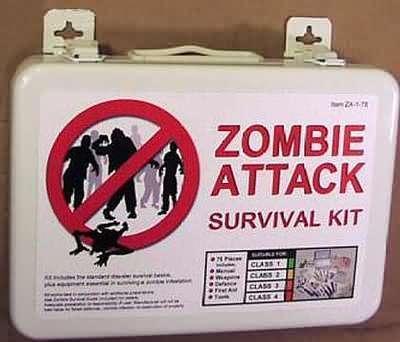 Looking through the list of the new FG front bench its like a bad slasher movie. Zombie like the have runs, the never weres and the never coulds have all reappeared with a vengeance
The first thing I saw about the new Fine Gael line up was Enda Kenny is going to be the spokesman for the six counties. Owen Patterson will be pleased. He'll look competent in comparison but maybe just maybe Enda is getting clued in...finally.
Look at that bald, scary thing lumbering in from left of stage. Politically dead and buried Michael ah yeah Noonan has resurrected himself into the Finance position.
Over in Foreign affairs we have Sean Barrett - a man who retired from politics in 2002 before deciding he wanted to change his mind in 2006. At thirty years in the Dail he'll bring an unheard of freshness to the new line up. Still tríocha blian ag fás seems to be a fine gael thing. Look at Enda.
Many of the new appointees have kept a low profile for years managing to escape public attention only to pop up like mushrooms when a bit of Fine Gael fertiliser was spread around. David Stanton a TD since 97 is hardly a big hitter, nor Andrew Doyle who comes from nowhere to become Agri. minister. Sure why not sure Enda cant trust half his party.
But what about Brian Hayes. He is no longer on the bench..
We'll miss you Brian.
Subscribe to:
Posts (Atom)